Running Zumba and Fitness Classes with Limited Slots
Whether you teach Zumba in the park, yoga in a rented studio or a weekend bootcamp, the same headaches come up: too many people for the space, people who reserve and don't come, and payments scattered across chats.
Why limit slots at all?
Limiting the number of people per class isn't just about space. It protects the quality of the class:
- Safety. Dancers and exercisers need room to move without bumping into each other.
- Attention. You can correct form and welcome new people when the group isn't too big.
- Venue rules. Parks, gyms and studios often set a maximum number of people.
- Demand. A class that fills up feels popular, and people learn to book early.
Count the space honestly. For dance fitness, plan roughly 2 to 3 square meters per person. For yoga, a mat plus space around it is usually around 2 square meters.
Set up your schedule as separate sessions
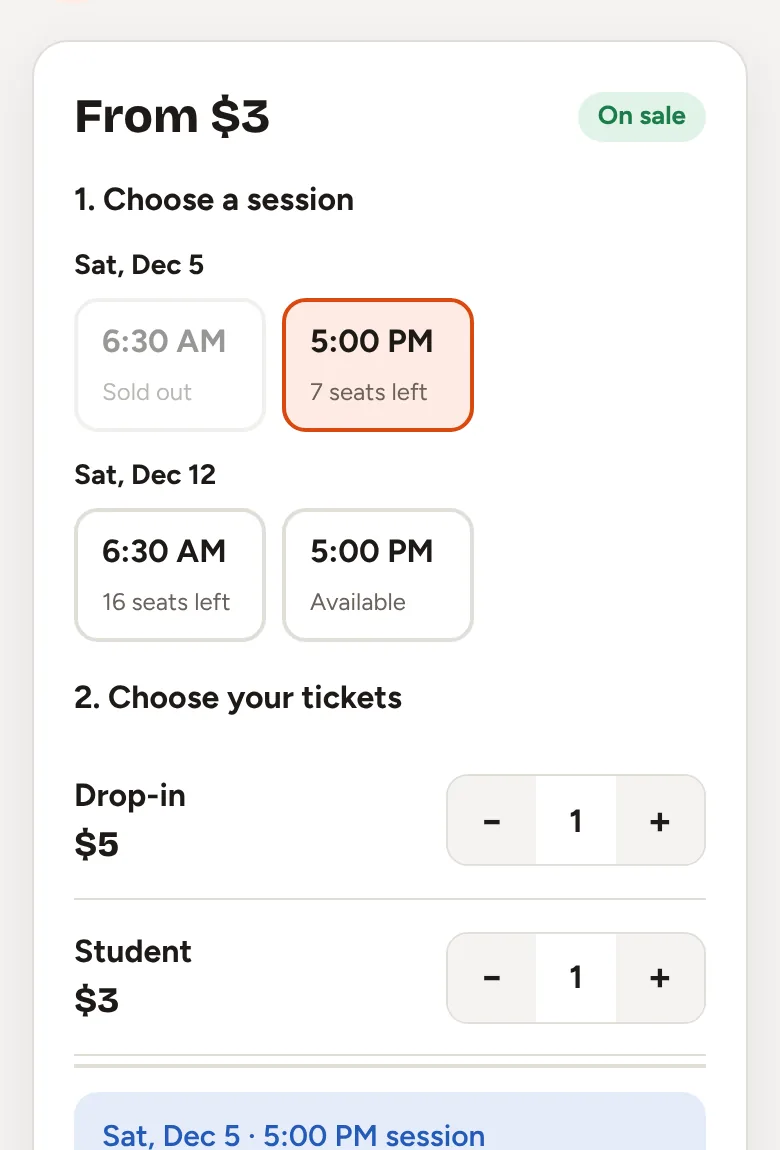
Each class time should have its own slot count: "Saturday 6:30 AM, 25 slots" and "Saturday 5:00 PM, 25 slots" are two different classes. This lets people choose the time that suits them, and stops one popular time from overflowing while another stays empty.
Publish the schedule a week or two ahead, so regulars can plan. If you teach the same times every week, add the next few weeks at once.
Decide how people pay
Drop-in
Pay per class. Simple and flexible, good for new people trying you out. Offer a lower price for students or seniors if your community includes them.
Packages
Five or ten classes at a lower price per class. Packages bring in money upfront and encourage regulars to keep coming. Keep a clear record of how many classes each person has left, and set an expiry date, such as two or three months.
Free trial class
A free first class lowers the barrier for beginners. Limit it to one per person, and still ask them to reserve a slot so they count toward the limit.
For payment, many instructors simply share an e-wallet or bank QR code. That works well as long as you match each payment to a name. Our guide on selling tickets when buyers pay you directly covers how to check payments without mix-ups.
Know who's new
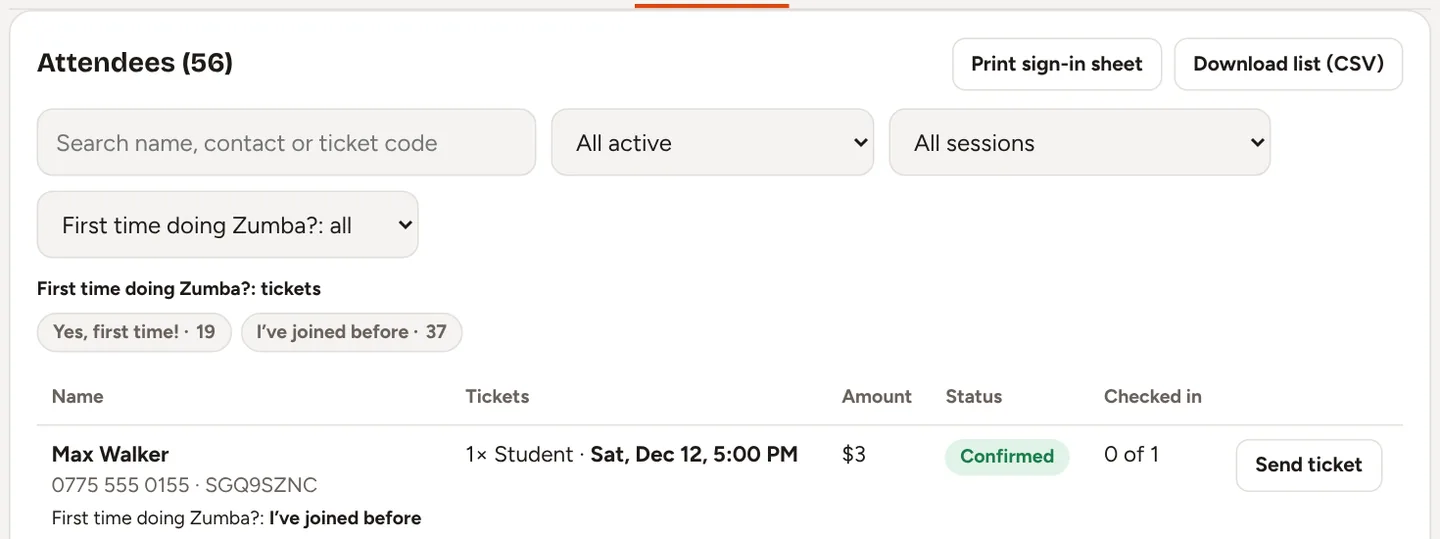
Ask one simple question when people sign up: "Is this your first class with us?" or "Any injuries I should know about?" It lets you greet beginners by name, show them the basic steps before class, and adjust moves for anyone who needs it. First-timers who feel welcomed are far more likely to come back.
Reduce no-shows
Empty spots in a full class are frustrating, especially when you turned people away. Some ways to reduce them:
- Ask for payment upfront. People who have paid almost always show up.
- Set a cancellation rule. For example, "Cancel at least 12 hours before to move to another class."
- Stop sign-ups shortly before class. Closing reservations 30 minutes before start time gives you a final headcount.
- Send a reminder the evening before, especially for early morning classes.
- Keep a waiting list and message the next person when someone cancels.
Bring a friend
Friends are the best marketing a fitness class has. Make it easy for one person to reserve for two, but ask for each person's name, so you know who's coming and who's new. A "bring a friend" class once a month, where the friend's first class is discounted or free, fills slots quickly.
Check-in on the day
Outdoors in the early morning, nobody wants to scroll through a chat for names. Keep it quick:
- Have the list of names for that session ready on your phone.
- If people have QR tickets, scan them as they arrive.
- Mark walk-ins and cash payments as you go, so your totals match at the end.
A tool that does this for you
Tixward handles classes with limited slots this way. You add each session with its own number of slots, and choose to call them sessions or classes. People pick a session, choose drop-in or student tickets, answer your "first time?" question for each person, and pay you directly by e-wallet, bank or cash. You see who's new in your list, and you can check people in on your phone at the park. Sales can stop automatically before each class starts. Classes with up to 300 paid tickets are free.
Waivers and safety
For physical activity, consider asking participants to agree to a simple health and safety statement, and to tell you about injuries or conditions. Rules differ by country, so if you run classes as a business, check with a local professional about waivers and insurance. Always have water nearby, know the nearest clinic, and keep a first aid kit in your bag.
Grow your class
- Post a short video of each class, with participants' permission.
- Thank first-timers personally after class.
- Celebrate milestones, like someone's 10th class.
- Ask regulars which new times they'd like, and add a session where demand is highest.
Spotted a mistake or have a tip to add? Email [email protected]. We update our guides when tools and settings change.