Planning a School Fundraiser Event: A Step-by-Step Guide
A good school fundraiser raises money, brings families together and leaves volunteers wanting to do it again. A bad one exhausts everyone for a few hundred dollars. The difference is mostly in the planning.
1. Start with the goal
Before choosing an event, agree on three things with the school and the parents' association:
- What the money is for. "New books for the library" or "the Grade 6 field trip" motivates people far more than "school funds".
- How much you need. A clear number lets you choose the right size of event and price.
- The deadline. When the money must be in hand.
Also check your school's rules on fundraising, handling money and selling to families, and get approval in writing.
2. Choose an event that fits your community
Some popular options, with what they need:
- Family fun run or walk. Moderate effort; needs a safe route, permits, race kits and volunteers along the course. Raises money through registration and sponsors.
- Concert, talent show or school play. Uses your own students as performers, so families come to watch. Needs a venue, sound and a program.
- Fair or food festival. Booths run by classes or parents. More planning, but it can raise a lot and involves everyone.
- Movie night. Low effort. Check the license for showing films in public; many films need a public performance license even for school events.
- Dinner or benefit night. Higher ticket price, smaller crowd. Works well with alumni and local businesses.
Pick something your volunteers can realistically run. A smaller event done well beats a big event done in a panic.
3. Build a simple budget
Estimate costs and income. The money you keep is income minus costs, so look for ways to cut costs: donated prizes, a free school venue, volunteer performers, or sponsors who cover a specific item like the sound system.
For ticket pricing, see how to price tickets for a small community event. Fundraisers often add a higher "supporter" ticket for families who want to give more.
4. Form a team with clear roles
- Coordinator: keeps the plan and timeline.
- Treasurer: handles all money, with a second person checking.
- Tickets and registration: sets up the sign-up page and answers questions.
- Promotion: posters, group chats, social media and school announcements.
- Logistics: venue, chairs, sound, food and cleanup.
- Volunteers lead: recruits parents and schedules shifts.
5. Sell tickets the simple way
Paper tickets sold through students are traditional, but they're easy to lose, hard to track and slow to count. Selling through a ticket page helps the treasurer keep clean records. With Tixward, which we make:
- parents pay the school's or association's e-wallet or bank account directly, so all the money goes to your cause;
- each payment is checked and approved by the treasurer, with the reference number on record;
- families receive QR tickets, and volunteers scan them at the gate on their phones;
- you can add ticket types like Adult, Student, Family and Supporter, and free tickets for volunteers;
- at the end, you download a list of every order for your report.
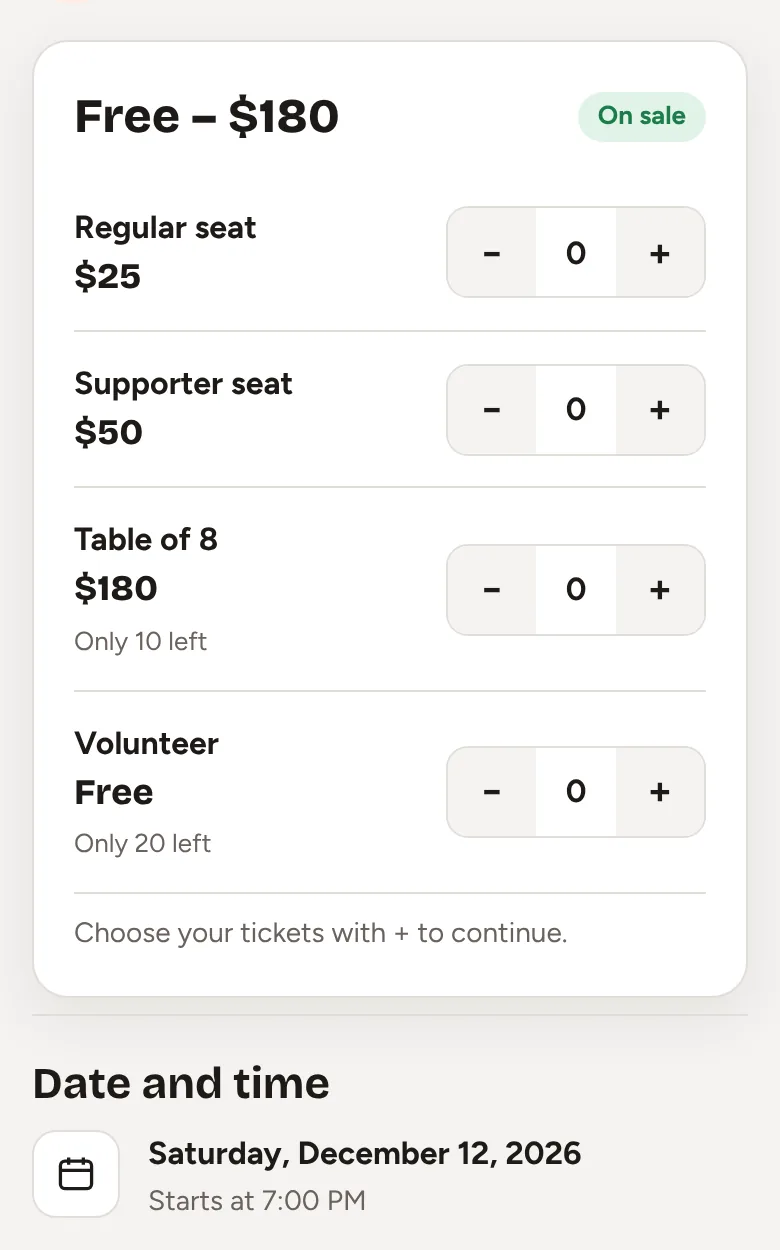
Tixward doesn't take a percentage of what you raise. Events with up to 300 paid tickets are free.
6. Promote it well
- Announce it four to six weeks ahead, with the goal clearly stated: "Help us raise $3,000 for new library books."
- Send the ticket link to class group chats, with a short message from the teacher or principal.
- Show progress: "We've sold 120 of 200 tickets!" Progress updates encourage the people who are still deciding.
- Ask local businesses to sponsor or donate prizes, and thank them publicly.
7. On the day
- Brief volunteers 30 minutes before the start.
- Set up a quick entrance. See how to run a smooth event check-in.
- Keep cash in a locked box with a written log, handled by two people.
- Take photos for the thank-you post and next year's promotion, following your school's rules on photographing students.
8. Report back
Transparency is what makes families support the next fundraiser. Within a week or two:
- Share how much was raised, what it cost, and how much went to the cause.
- Thank volunteers, sponsors and families by name where appropriate.
- Later, show what the money bought: a photo of the new books on the shelves goes a long way.
- Keep the records, receipts and attendance lists for the school's files.
A short recap video helps too. See how to make a school or church event recap video.
Spotted a mistake or have a tip to add? Email [email protected]. We update our guides when tools and settings change.